Understanding Upper and Middle Back Pain: Causes, Symptoms, and Treatments
Welcome, we are here to offer you a deep understanding of upper and middle back pain, its symptoms, causes, and treatments to help restore your spine-health for better wellness.
What is Upper Back Pain?
When you experience widespread pain in your upper back muscles, between the neck and lower back, covering the thoracic spine, you are experiencing upper back pain. This type of discomfort can lead to pain and unease in your daily life, possibly a reflection of vertebra, or spinal disc issues, or related to your rib cage. It encompasses middle back pain too.
Specific upper back pain conditions
Specific conditions may be causing your upper back pain. A common one include having a herniated disk, which can cause pain, strain, and discomfort in your thoracic spine. Osteoarthritis, a type of arthritis due to overuse of the spinal cord, could also be a source of pain. Other potential causes include poor posture, strain on back muscles, and medical conditions affecting the heart and lungs.
What are the Symptoms of Upper Back Pain?
The pain experienced with upper back pain may be widespread and becomes chronic if not properly managed. Symptoms of upper back pain may include numbness, discomfort in the thoracic region of the spine, and pain between your shoulder blades. It’s important to pay attention and address these symptoms at home or seek medical assistance where necessary.
Common Causes of Upper Back Pain
Common causes of upper back pain include poor posture leading to muscle strain and overuse in the thoracic region. A herniated disc, spinal misalignment, or ligament strain may also cause upper back pain. Health information suggests that lower back pain, a potential complication, may be caused by similar issues.
What Exercises Can You Do At Home To Help With Upper Back Pain?
Exercises targeting the upper back can be very effective in relieving pain and strengthening the muscles in that area. Here are some exercises you can easily do at home to help with upper back pain:
- Cat-Cow Stretch: This yoga pose helps in loosening the back muscles. On all fours, alternate between arching your back towards the ceiling (cat) and dipping it towards the floor (cow), while keeping your head in line with your spine.
- Thoracic Extension: Sit in a chair with your back straight. Place your hands behind your head and gently arch backward, focusing on extending your upper back. Hold for a few seconds and return to the starting position.
- Child’s Pose: A gentle yoga stretch that relaxes the back muscles. Kneel on the floor, sit back on your heels, and stretch your arms forward on the ground, forehead touching the floor.
- Shoulder Blade Squeeze: Sit or stand with your arms at your sides. Squeeze your shoulder blades together, hold for a few seconds, and release. This exercise strengthens the muscles between your shoulder blades.
- Doorway Stretch: Stand in a doorway and place your arms on the door frame, with your elbows at a 90-degree angle. Lean forward to stretch your chest and the front of your shoulders, which can help relieve upper back tension.
- Foam Roller Exercise: Lie down with a foam roller positioned under your upper back. Gently roll back and forth to massage and stretch the thoracic spine.
- Arm Slides: Stand with your back against a wall, arms by your side. Slowly slide your arms up over your head and back down, keeping contact with the wall.
- Scapular Retraction: Lying face down, gently retract your scapulae (or shoulder blades) as if trying to hold a pencil between them. Lift your hands and arms slightly off the ground if possible.
- Neck Stretches: Gently tilt your head to one side, bringing your ear towards your shoulder, and then to the other side. This can help relieve tension in the neck and upper back.
- Prone Y, T, W, and L: Lie face down and move your arms into these four positions. Lift your arms slightly off the ground for each position, engaging your upper back muscles.
It’s important to perform these exercises with good form and avoid any movements that cause pain. Start with a few repetitions and gradually increase as you become more comfortable. Consistency is key for the best results. If you have persistent upper back pain, it’s advisable to consult us at Shoreham Osteopathy Centre before starting any new exercise routine.
How Osteopathy Can Help Treat Upper Back Pain
Osteopathy is a holistic approach to healthcare that focuses on treating the whole body, not just the symptoms of a condition. It can be particularly effective in treating upper back pain, which often arises from a combination of muscular tension, joint dysfunction, and postural imbalances. Here’s how osteopathy can help in treating upper back pain:
- Holistic Assessment: Osteopaths perform a comprehensive assessment to identify the root causes of upper back pain. They consider factors like posture, lifestyle, work ergonomics, and overall health, which could contribute to the pain.
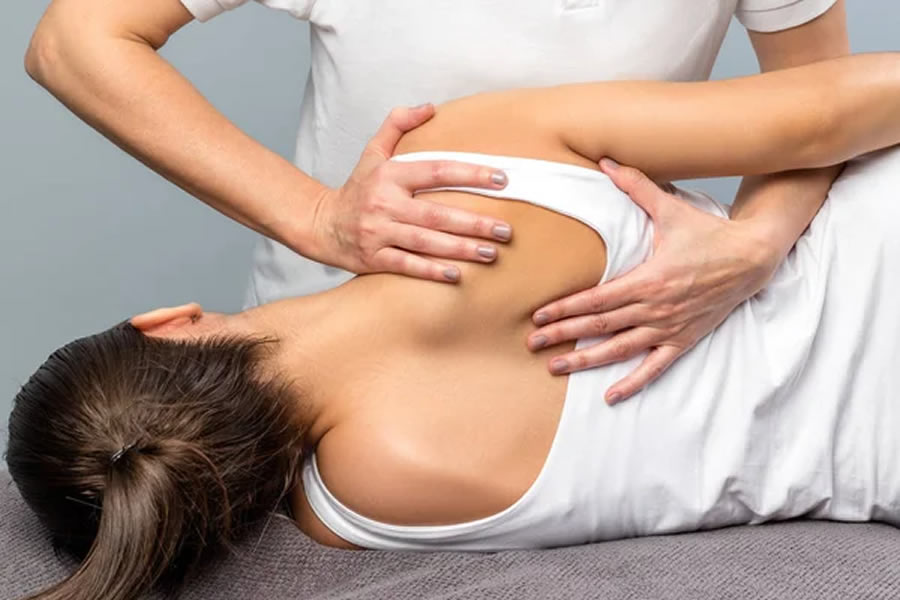
- Manual Therapy: Osteopaths use a range of hands-on techniques such as soft tissue massage, joint mobilization, and manipulation. These techniques help to release tension in the muscles, improve joint mobility, and enhance blood circulation in the affected area.
- Pain Relief: The hands-on techniques used in osteopathy can provide immediate pain relief by reducing muscle tension and improving joint function.
- Improved Mobility and Function: Osteopathic treatment aims to restore optimal movement in the upper back and neck, reducing stiffness and improving function.
- Postural Correction: Many cases of upper back pain are related to poor posture. Osteopaths can provide advice and exercises to correct postural imbalances and strengthen the muscles that support good posture.
- Stress Management: Osteopathy can help manage stress, which often contributes to muscular tension. Techniques like cranial osteopathy can be particularly effective in promoting relaxation and reducing stress-related tension in the body.
- Exercise Advice: Osteopaths often prescribe specific exercises to help strengthen and stabilize the upper back and neck, improving flexibility and preventing future episodes of pain.
- Ergonomic and Lifestyle Advice: Osteopaths can provide guidance on proper ergonomics at work and during other activities, as well as advice on lifestyle changes to support recovery and prevent recurrence.
- Addressing Contributing Factors: Osteopathy treats the body as a whole, addressing other factors that might contribute to upper back pain, such as issues with other parts of the spine, ribcage misalignments, or even referred pain from organs.